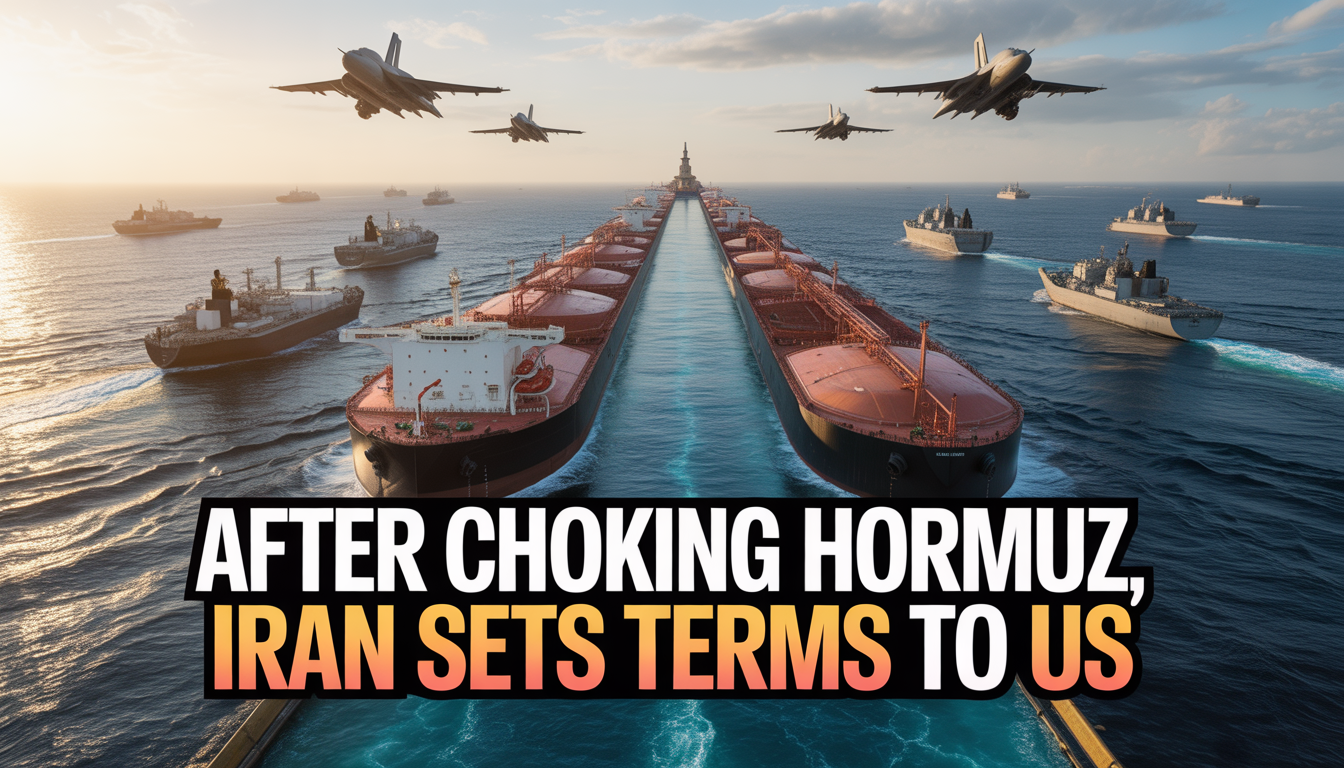
The Strait of Hormuz has once again become the epicenter of a major geopolitical crisis after a series of dramatic attacks on commercial vessels shook global shipping routes. Overnight, multiple oil tankers and cargo ships operating in the Persian Gulf, the Strait of Hormuz, and surrounding waters were reportedly targeted in coordinated strikes. Among the vessels affected were Western and American-linked ships, including a tanker reportedly associated with the United States that was stationed in Iraqi waters. These attacks sent immediate shockwaves across global energy markets, pushing crude oil prices beyond the symbolic threshold of one hundred dollars per barrel.
Escalation in the Strait of Hormuz and the Oil Shock:
The attacks appear to have been carried out using a mix of modern asymmetric warfare tactics. Reports suggest that drones, explosive-laden boats, projectiles, and unmanned underwater vehicles were deployed to strike vessels across several locations. Some ships were reportedly hit by drone attacks, while others were damaged by projectiles or explosive devices planted on boats. Several ships caught fire, forcing emergency evacuations of crew members and triggering rescue operations. In one tragic incident, a crew member reportedly lost his life while others were safely evacuated.
These developments illustrate how vulnerable global shipping routes remain when geopolitical tensions escalate. The Strait of Hormuz is one of the world’s most important maritime corridors, carrying a massive portion of global oil shipments. Even a small disruption in this narrow waterway can have immediate consequences for energy markets and international trade. The attacks, therefore, represent not just a regional conflict but a threat to the stability of the global economy.
Iran’s Three Conditions for Ending the War:
Following the escalation in the Strait of Hormuz, Iran delivered a message that dramatically shifted the narrative of the conflict. Iranian leadership reportedly stated that if the United States and its allies want peace, they must first accept three conditions. The first demand centers on recognition of Iran’s sovereign rights. Iranian officials insist that their country must be allowed to exercise its legitimate rights as a sovereign nation, including the ability to pursue nuclear energy development within the framework of international regulations. They argue that enrichment of nuclear fuel for peaceful purposes is permitted under international agreements and should not be restricted by external pressure.
The second condition involves financial compensation for the damage Iran claims to have suffered during the conflict. The Iranian leadership argues that infrastructure destruction, economic losses, and civilian casualties caused by military actions must be compensated through reparations. This demand represents one of the most controversial aspects of the proposal because it effectively asks the United States and its allies to pay damages for the consequences of the war.
The third demand focuses on long-term security guarantees. Iran has stated that it wants firm international assurances that similar attacks will not occur again in the future. According to Iranian officials, such guarantees would ensure that foreign powers refrain from initiating further military operations against the country. This demand reflects Tehran’s attempt to establish a framework that would prevent future escalation and reinforce its national security.
These conditions have sparked intense debate internationally because they present a narrative very different from the one promoted by Western leaders. While some political figures claim that Iran has been strategically weakened, these demands portray a government that is negotiating from a position of strength rather than defeat.
Strategic Messaging and the Global Power Game:
Iran’s announcement of these conditions appears to serve multiple strategic purposes. Domestically, the message is designed to reassure the Iranian public that their leadership remains strong and defiant. By framing the demands as reasonable and rooted in international law, the government aims to reinforce national unity and discourage internal dissent during a period of crisis. Presenting the conflict as a struggle against foreign aggression also helps rally public support and strengthen the narrative of resistance.
At the same time, the message is directed toward Iran’s adversaries. By setting conditions for peace rather than requesting it, Tehran signals that it does not view itself as a defeated party. This approach challenges claims that the conflict has already been decided and instead emphasizes the idea that any ceasefire must be negotiated on equal terms. In this way, Iran attempts to reshape the diplomatic conversation and assert its role as an equal participant in determining the outcome of the conflict.
The message also targets the broader international community. By linking peace to concepts such as sovereignty, reparations, and non-aggression guarantees, Iran seeks to frame its position within the language of international law. This strategy allows the country to portray its demands as legitimate rather than confrontational. At the same time, continued attacks on tankers and disruptions to shipping routes create economic pressure that affects countries far beyond the Middle East.
This combination of military pressure and diplomatic messaging reflects a broader geopolitical strategy. By threatening global energy supply while simultaneously presenting negotiation conditions, Iran is attempting to influence both markets and political decision-makers. Rising oil prices, disrupted shipping routes, and fears of an energy shortage place additional pressure on international actors to seek a resolution.
Ultimately, the situation represents a complex geopolitical chess match. Both sides appear to be shaping narratives that allow them to claim victory domestically while keeping diplomatic options open. For Iran, simply maintaining the survival of its political system may already represent a strategic success. For the United States and its allies, maintaining stability in global energy markets and regional security remains the primary objective. As tensions continue to unfold, the Strait of Hormuz remains the focal point of a crisis that could reshape both regional politics and the global energy landscape.
Conclusion:
The crisis in the Strait of Hormuz highlights how quickly regional tensions can escalate into a global economic and political challenge. What began as targeted attacks on commercial vessels has now evolved into a broader confrontation involving energy security, international law, and geopolitical power dynamics. The sharp rise in oil prices and disruption of key shipping routes demonstrate how deeply interconnected the modern world is, where a single chokepoint can influence markets across continents.
Iran’s response, particularly its three conditions for ending the conflict, reflects a strategic attempt to shift the narrative from defense to negotiation. By framing its demands around sovereignty, compensation, and long-term security, Tehran positions itself not as a weakened actor but as one seeking to negotiate from strength. At the same time, this approach complicates diplomatic efforts, as such demands are difficult for opposing powers to accept without significant political consequences.
The situation ultimately represents more than a military standoff. It is a test of how global powers manage conflict in an era where economic pressure, narrative control, and strategic signaling are as important as direct confrontation. Whether this crisis leads to de-escalation or further instability will depend on how both sides balance power, diplomacy, and the broader impact on the global economy.
FAQs:
1. Why is the Strait of Hormuz so important?
It is one of the world’s most critical oil transit routes, with a large percentage of global energy shipments passing through it. Any disruption can significantly impact global oil prices and trade.
2. What triggered the recent escalation in the region?
A series of coordinated attacks on commercial vessels, including oil tankers, increased tensions and created fears of broader conflict, leading to immediate market reactions.
3. What are Iran’s main demands to end the conflict?
Iran has reportedly outlined three conditions: recognition of its sovereign rights, financial compensation for damages, and long-term security guarantees against future attacks.
4. How do these events affect global markets?
Disruptions in oil supply routes increase uncertainty, leading to higher oil prices, which can affect transportation, production costs, and overall economic stability worldwide.
5. Is this situation likely to lead to a larger war?
While the risk exists, both sides also have strong incentives to avoid full-scale conflict due to its economic and political consequences. Diplomatic efforts will play a key role in determining the outcome.