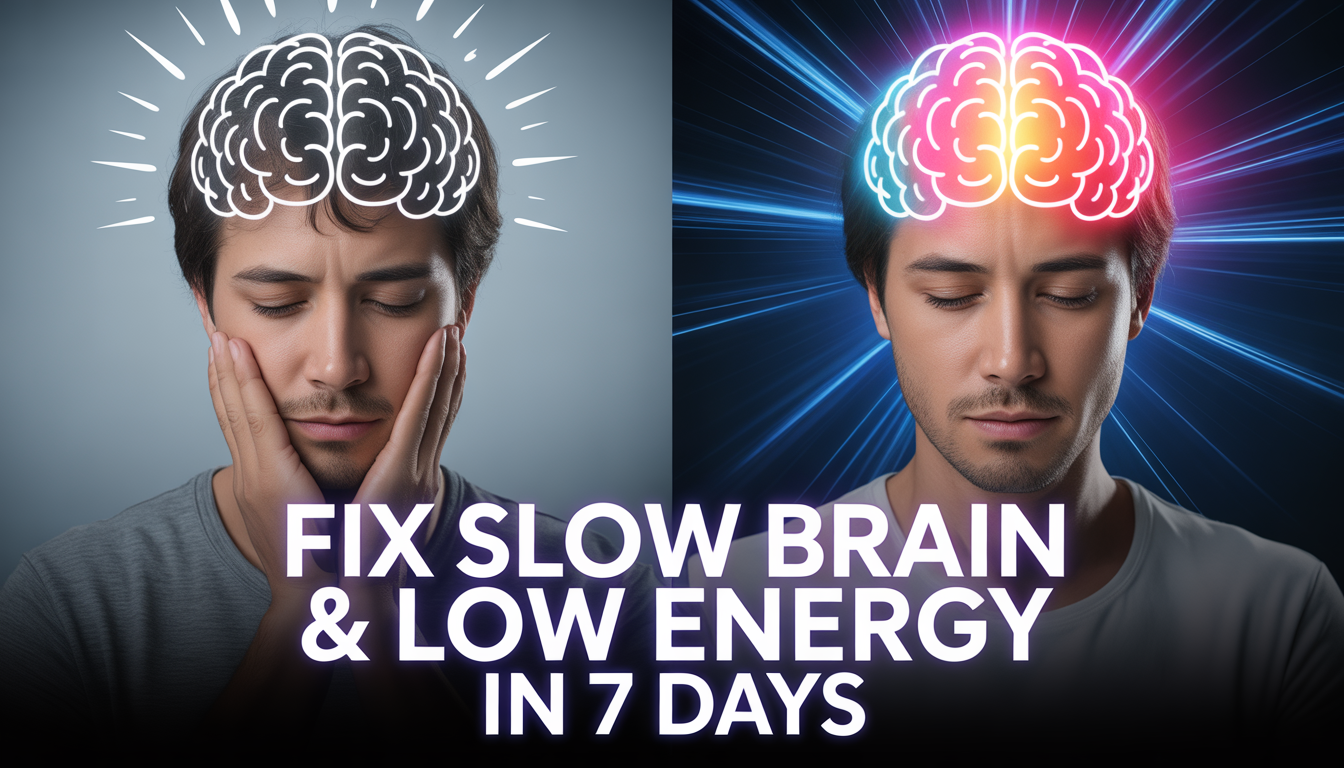
Many people today wake up with a strange feeling that something inside their mind has slowed down. The brain is awake, the body is functioning, yet the clarity that once existed seems to have faded. Words slip away in the middle of conversations, thoughts take longer to organize, and even simple decisions feel heavier than they should. This experience is often described online as brain fog. It is not exactly tiredness, and it is not ordinary fatigue that disappears after a night of sleep. Instead, it feels like a layer of haze covering the mind.
When the Mind Feels Present but Not Sharp:
Over the last few years, thousands of people have started describing similar experiences across the internet. Memory feels weaker, focus becomes unstable, and motivation slowly fades. Research published in recent years suggests that this problem is far more widespread than most people realize. Some post-COVID studies even found measurable drops in cognitive performance in certain individuals. However, the surprising discovery from researchers is that the trend of mental dullness actually began years before the pandemic. This means brain fog is not only a medical issue; it is also deeply connected to the way modern life operates.
Brain scans often show no visible damage, no structural problem, and no clear diagnosis. Yet the experience remains very real. People feel mentally slower even though nothing obvious appears wrong. To understand this phenomenon, we must first accept an uncomfortable truth about how the human brain actually works.
The Brain Is a Biological System With Limits:
Motivational culture often describes the human brain as a limitless machine capable of endless productivity. In reality, the brain is a biological circuit with strict limitations. Just like a computer processor has a maximum speed and memory capacity, the brain also operates under boundaries of energy, attention, and processing power.
Although the brain represents only about two percent of the body’s weight, it consumes roughly twenty percent of the body’s energy. This means the brain must constantly decide where its energy should be spent. Its primary goal is not happiness, success, or personal achievement. The brain’s most fundamental objective is survival.
From an evolutionary perspective, organisms that prioritized survival were the ones whose genes continued into the future. Over thousands of years, this principle became deeply coded into the brain’s operating system. Every emotion, instinct, and reaction we experience is influenced by this survival algorithm.
Two basic rules guide this algorithm. The first rule is life protection. The brain constantly scans the environment for possible threats and tries to keep the body safe from harm. The second rule is energy efficiency. Because energy is limited, the brain prefers to conserve resources and spend effort only where it believes survival benefits exist.
These two rules form the foundation of how the brain reacts to challenges. When this system functions properly, the brain allocates energy efficiently and maintains mental clarity. But when the system becomes overloaded, the brain begins to slow down in order to protect itself.
The Hidden Survival Response Behind Mental Shutdown:
To understand brain fog more deeply, it helps to look at a historical example. During the First World War, a British soldier named Harry Farr was ordered to move forward in battle. However, despite repeated commands, he remained completely frozen. His superiors believed he was acting out of cowardice. He was arrested, tried in military court, and eventually executed.
What made this case disturbing was that he was not alone. Hundreds of soldiers experienced the same reaction during intense combat. Instead of fighting or running, they simply froze.
For many years, this behavior was misunderstood. Later research into the nervous system revealed that the brain possesses a third survival response beyond the commonly known fight or flight reactions. This response is called the freeze response.
When the brain detects a threat that seems impossible to escape, it may temporarily shut down movement. The body becomes still while the mind remains alert. This mechanism evolved because sometimes survival depends on staying motionless until danger passes.
In the natural world, predators eventually leave, and the nervous system returns to normal. But modern humans face a very different situation. Our threats are rarely physical predators. Instead, they are psychological pressures that never completely disappear.
Deadlines, competition, financial stress, constant comparisons, digital distractions, and social expectations create a continuous sense of pressure. The brain interprets these situations as persistent threats. Because these pressures do not end quickly, the nervous system struggles to reset itself.
Instead of freezing completely like in extreme danger, the brain gradually shifts into a state of reduced energy and slower thinking. This long-term response is what many people experience as brain fog.
The Modern Lifestyle That Creates Brain Fog:
One of the most important factors behind brain fog is the imbalance between stress, stimulation, and recovery. In simple terms, brain fog appears when stress and stimulation remain high while recovery remains low for long periods of time.
Modern lifestyles provide constant stimulation. Many people spend six to eight hours each day looking at screens. Social media, streaming platforms, and endless digital content continuously demand attention. At the same time, people face growing pressure to perform academically, professionally, and socially.
The brain receives thousands of signals every day telling it to stay alert and respond to new information. However, the time required for mental recovery has decreased significantly. Sleep hours have shortened, and quiet moments without stimulation have become rare.
Even when someone sleeps, the brain may still carry unresolved stress from the day. The mind continues replaying worries about the future, unfinished tasks, or personal expectations. This means the nervous system rarely reaches a fully restored state.
Over time, the brain recognizes that constant effort is not producing meaningful progress or relief from stress. Because of its energy efficiency rule, it begins conserving energy by reducing activity in the executive areas responsible for focus, planning, and decision-making.
As this process continues, people start experiencing slower thinking, lower motivation, and difficulty concentrating. The brain is not failing; it is simply protecting itself from chronic overload.
Why Motivation and Focus Start Collapsing:
The part of the brain responsible for planning, decision-making, and goal-directed behavior is called the executive network. This network includes areas such as the prefrontal cortex, which helps people stay focused, solve problems, and regulate emotions.
However, these regions require a large amount of energy to operate. When the brain perceives that effort repeatedly leads to stress without reward, it begins reducing energy supply to these systems.
This creates a situation where a person wants to work but cannot generate the mental drive to begin. Tasks feel heavier, procrastination increases, and concentration becomes unstable.
At the same time, stress hormones such as cortisol remain elevated. High cortisol levels interfere with memory and learning, while also increasing anxiety. Eventually, the emotional centers of the brain, especially the amygdala, become more dominant than the logical areas.
When this shift occurs, people experience mental dullness, emotional exhaustion, and a lack of clarity. The brain essentially slows down to preserve its remaining resources.
Scientists describe this state as allostatic overload. It occurs when the body’s stress management system remains activated for too long without proper recovery.
The Power of Structure in Restoring Mental Clarity:
One of the most effective ways to reverse brain fog is to restore a sense of structure and control in daily life. In the modern world, people are exposed to countless options, distractions, and decisions every day. Each unfinished decision creates what psychologists call an open loop in the mind.
These open loops consume mental processing power even when we are not actively thinking about them. As they accumulate, they reduce the available bandwidth of the brain’s executive system.
Creating structure helps close these loops. Fixed waking times, defined work periods, clear goals, and predictable routines reduce uncertainty and give the brain a stable framework.
When life becomes structured, the brain begins to regain its sense of control over the environment. Research consistently shows that predictability and control significantly reduce stress hormones.
Instead of constantly reacting to external noise, the brain can focus on a smaller number of meaningful tasks. This restores mental energy and gradually improves cognitive clarity.
Movement and the Brain’s Miracle Growth Protein:
Another powerful tool for reversing brain fog is physical movement. Scientists discovered that aerobic exercise triggers the release of a protein called Brain Derived Neurotrophic Factor, often abbreviated as BDNF.
This protein plays a crucial role in brain health because it supports the growth of new neurons and strengthens existing neural connections. In laboratory experiments, neurons exposed to BDNF begin forming new branches, almost like a plant growing new leaves after receiving water.
Even moderate exercise, such as brisk walking, cycling, or skipping for twenty minutes, can stimulate the release of this protein. Over time, increased BDNF levels support memory formation, learning ability, and mental clarity.
Exercise also helps regulate stress hormones by reducing excess cortisol levels. Many people notice that their thoughts feel clearer after physical activity because the brain has released built-up tension.
Regular movement, therefore, acts as both a biological repair mechanism and a mental reset system.
Deep Sleep and the Brain’s Cleaning System:
One of the most fascinating discoveries in neuroscience during the past decade is the existence of the brain’s glymphatic system. This system functions like a waste-removal network that cleans metabolic toxins from the brain.
During deep sleep, brain cells shrink slightly, allowing cerebrospinal fluid to flow through the brain and wash away accumulated waste products. These waste substances can damage neurons if they remain inside the brain for too long.
The efficiency of this cleaning process increases dramatically with longer sleep duration. Five hours of sleep provides limited cleaning, while eight hours allows the system to remove far more toxins.
This is why consistent sleep schedules are essential for mental clarity. Reducing screen exposure before bedtime is especially important because digital light interferes with the natural signals that prepare the brain for deep sleep.
Allowing the brain enough time to perform its nightly cleaning cycle restores cognitive performance and reduces the foggy feeling many people experience during the day.
A Simpler Life for a Sharper Mind:
The rise of brain fog is closely connected to the complexity and noise of modern life. Constant stimulation, endless choices, and continuous stress create an environment where the brain struggles to maintain balance.
The solution is not extreme productivity or complicated self-optimization strategies. Instead, it lies in simplifying daily life. Reducing unnecessary noise, limiting overstimulation, and prioritizing recovery allow the brain to operate within its natural limits.
Structure, movement, and deep sleep form the foundation of mental recovery. When these elements become consistent parts of daily life, the brain gradually restores its energy balance.
Mental sharpness does not disappear permanently. In many cases, it simply waits for the conditions that allow it to return. By aligning modern habits with the brain’s natural survival system, people can reclaim clarity, motivation, and energy within a surprisingly short period of time.
Conclusion:
Brain fog and low energy are not signs that something is permanently broken—they are signals that the brain is overwhelmed and trying to protect itself. In a world filled with constant stimulation, pressure, and lack of recovery, the brain shifts into a survival mode where it conserves energy by slowing down thinking, reducing focus, and limiting motivation. What feels like laziness or lack of discipline is often a biological response to chronic stress and overload.
The key to reversing this state is not forcing productivity but restoring balance. Structure brings control, movement rebuilds brain function, and deep sleep allows the mind to repair itself. When these elements are consistently applied, the brain gradually exits survival mode and returns to a state of clarity and efficiency.
The most powerful realization is that mental sharpness is not lost it is suppressed. By simplifying life, reducing unnecessary stimulation, and respecting the brain’s natural limits, it is possible to regain focus, energy, and motivation in a relatively short time. The transformation does not come from doing more, but from doing the right things consistently.
FAQs:
1. What exactly is brain fog?
Brain fog is a state of reduced mental clarity where thinking feels slow, focus is weak, and memory becomes unreliable. It is often caused by stress, overstimulation, and lack of proper recovery rather than a structural brain problem.
2. Why do I feel tired even after sleeping?
Sleep alone is not enough if stress remains high or sleep quality is poor. The brain may not reach deep restorative stages needed to fully recover, leading to continued fatigue and mental dullness.
3. How long does it take to recover from brain fog?
Improvement can begin within a few days if lifestyle changes are consistent. However, full recovery depends on how long the brain has been under stress and how well habits like sleep, exercise, and structure are maintained.
4. Does exercise really improve brain function?
Yes. Physical activity releases beneficial proteins like BDNF, reduces stress hormones, and improves blood flow to the brain, all of which enhance memory, focus, and overall mental clarity.
5. What is the most important step to fix low energy quickly?
Creating a consistent daily structure with proper sleep, limited distractions, and at least one meaningful task is the fastest way to restore control and improve energy levels.