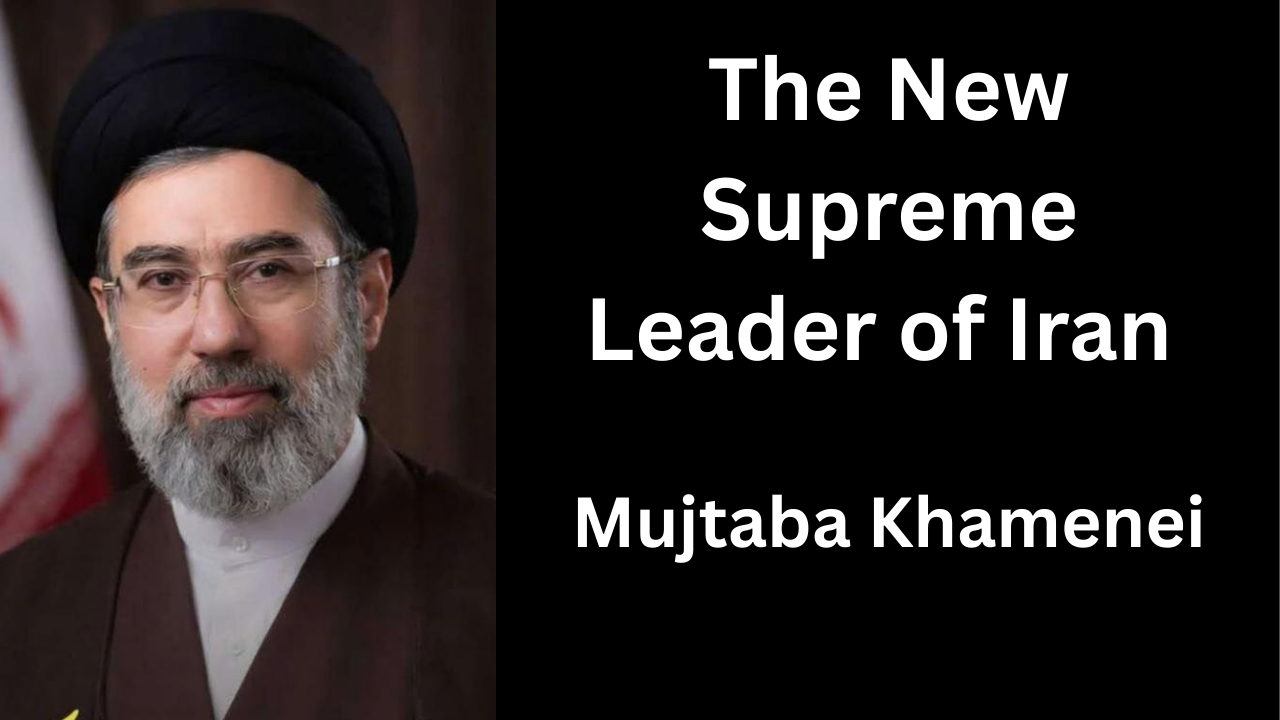
For many years, the name Mujtaba Khamenei remained largely unknown to the global public. Unlike many political figures who regularly appear in the media, Mujtaba Khamenei lived almost entirely away from cameras and public attention. Very few speeches, interviews, or appearances were associated with him. Because of this secrecy, many ordinary people across the world had barely heard his name. However, intelligence agencies and political observers had long been aware that behind the scenes he held considerable influence inside Iran.
When discussions about Iran’s future leadership began to include Mujtaba Khamenei as a potential Supreme Leader, the reaction from global powers was immediate. Some Western leaders expressed strong opposition to the idea, believing that his leadership could dramatically reshape Iran’s political direction. Intelligence agencies such as the CIA in the United States and Mossad in Israel had reportedly monitored his activities for years, considering him a key figure within Iran’s internal power structure.
What made Mujtaba Khamenei particularly intriguing was the contrast between him and his father, Ayatollah Ali Khamenei. While Ali Khamenei was often viewed internationally as a religious scholar and ideological leader, Mujtaba was frequently described as someone with deeper connections to military and security institutions. This difference created the perception that a future led by him could reflect a more strategic and security-focused approach rather than a purely religious leadership style.
The Historical Roots of Iran’s Supreme Leadership:
To understand Mujtaba Khamenei’s rise, it is necessary to look back at the historical transformation of Iran’s political system. Several decades ago, Iran was ruled by Shah Mohammad Reza Pahlavi, whose monarchy maintained strong relationships with Western powers. Despite economic modernization, many Iranians viewed his government as corrupt, authoritarian, and disconnected from the cultural and religious identity of the population.
During this period, a powerful opposition movement emerged under the leadership of Ayatollah Ruhollah Khomeini. Khomeini criticized the Shah’s rule and called for a system based on Islamic governance and national independence. His message gained enormous support across Iran, particularly among religious communities and political activists who believed the country’s sovereignty had been compromised.
Eventually, the political pressure became so strong that the Shah was forced to leave Iran in 1979. This event marked the beginning of the Iranian Revolution. With the monarchy gone, Ayatollah Khomeini returned from exile and established the Islamic Republic of Iran. In this new system, the role of Supreme Leader became the highest authority in the country, combining religious leadership with political power.
However, the revolution also created tensions with global powers, particularly the United States. Iran’s new leadership adopted a confrontational stance toward foreign influence, which led to decades of geopolitical rivalry and conflict.
War and the Formation of a New Generation:
Shortly after the revolution, Iran faced one of the most devastating conflicts in its modern history. Iraq, under the leadership of Saddam Hussein, launched a military invasion of Iran in 1980. The war lasted eight years and resulted in enormous casualties on both sides.
This war shaped an entire generation of Iranians, including the young Mujtaba Khamenei. During these years, his father Ali Khamenei was already a prominent political figure and later became President of Iran while the war continued. Despite his father’s position, Mujtaba reportedly lived much of his early life observing the national struggle from within a society deeply affected by conflict.
Accounts suggest that as he grew older, he became personally involved with Iran’s military structures. When he reached adulthood, he reportedly joined the Iranian forces during the later stages of the Iran–Iraq war. Although he was the son of a powerful leader, many narratives claim that he served alongside ordinary soldiers on the front lines.
These experiences contributed to the image that many within Iran’s military circles later developed of him. Unlike some political leaders who rise through purely academic or religious institutions, Mujtaba was often portrayed as someone who understood the realities of warfare and national defense from a closer perspective.
The Transition of Power After Khomeini:
In 1989, a major turning point occurred when Ayatollah Khomeini passed away. His death created an urgent question for Iran’s leadership structure: who would become the next Supreme Leader?
The decision was made by the Assembly of Experts, a body composed of senior religious scholars responsible for selecting the country’s highest authority. After deliberations and voting, Ali Khamenei was chosen as the new Supreme Leader of Iran.
This appointment reshaped the political landscape of the country. With Ali Khamenei now occupying the most powerful position in Iran, his family inevitably came under greater attention from political observers. However, Mujtaba Khamenei continued to maintain a relatively low public profile despite his father’s position.
Throughout the following years, he reportedly developed close relationships with influential networks inside Iran’s political, military, and intelligence institutions. These connections gradually strengthened his reputation as someone with significant behind-the-scenes influence.
Education and the Path of Religious Scholarship:
While maintaining ties with security institutions, Mujtaba Khamenei also pursued religious education. Like many figures within Iran’s leadership structure, he studied within the traditional seminaries where Islamic jurisprudence and theology are taught.
This combination of military association and religious scholarship shaped his public perception in a unique way. Many Iranian leaders traditionally emerge from academic religious backgrounds, but Mujtaba appeared to represent a blend of clerical education and strategic political awareness.
His academic training placed him within the scholarly traditions that play a crucial role in Iran’s governing system. At the same time, his reported involvement with military and intelligence structures suggested that he had a deep understanding of the country’s security dynamics.
For years, however, he remained largely absent from international media coverage. Only a handful of photographs and occasional reports about his activities surfaced in public discussions.
International Attention and Intelligence Reports:
Interest in Mujtaba Khamenei grew significantly after certain documents and reports began circulating in global media. Some leaked materials suggested that he possessed considerable influence within Iran’s internal political structure, particularly through relationships with security and intelligence institutions.
These reports attracted attention from governments and analysts who were already studying Iran’s leadership dynamics. Observers began to speculate that if Iran ever faced a leadership transition, Mujtaba Khamenei could emerge as a powerful candidate for the position of Supreme Leader.
As a result, international agencies reportedly monitored developments related to him more closely. Economic sanctions and political pressure from Western governments were sometimes interpreted as part of broader strategies aimed at influencing Iran’s internal political future.
Despite this growing attention, Mujtaba himself continued to remain largely silent in public discourse. His absence from the international media landscape only increased the sense of mystery surrounding his role.
Debates Over Iran’s Strategic Future:
Another major issue shaping Iran’s political debates has been the question of nuclear capability. For years, international tensions have revolved around whether Iran intends to develop nuclear weapons.
Iran’s leadership has repeatedly stated that nuclear weapons are forbidden under Islamic law. Ayatollah Ali Khamenei issued religious rulings declaring that the creation and use of such weapons would be morally unacceptable.
However, internal debates within Iran have often been more complex. Some political thinkers argue that the country should possess stronger strategic deterrence to protect itself against potential foreign attacks. Others insist that maintaining moral and religious principles is essential to Iran’s political identity.
These debates have remained central to Iran’s geopolitical relationships with other nations, particularly the United States and Israel.
The Emergence of a Potential Successor:
As Iran’s leadership structure continues to evolve, the question of succession remains one of the most important political topics inside the country. Because the position of Supreme Leader carries immense authority, any potential successor inevitably becomes the subject of intense discussion.
Mujtaba Khamenei has frequently appeared in these conversations due to his background, connections, and long-standing association with the country’s leadership institutions. Supporters believe his experience within both religious and security circles positions him as a strong candidate capable of navigating complex national challenges.
At the same time, critics and foreign governments often express concern about how such a leadership transition might influence Iran’s international relationships.
Regardless of differing opinions, it is clear that Mujtaba Khamenei represents an important figure within Iran’s contemporary political landscape. His life story reflects the intersection of revolution, war, religious education, and geopolitical tension that has shaped modern Iran.
As global attention continues to focus on the future direction of the country, the name Mujtaba Khamenei remains closely tied to the broader discussion about leadership, power, and Iran’s role in world politics.
Conclusion:
Mujtaba Khamenei, though largely unknown to the global public, has emerged as a significant figure within Iran’s political and security landscape. Unlike his father, Ayatollah Ali Khamenei, Mujtaba combines religious scholarship with deep connections to military and intelligence institutions, giving him a unique profile as a potential future Supreme Leader. His life reflects the intertwining of Iran’s revolutionary history, the Iran–Iraq war, and decades of internal political maneuvering.
As Iran faces questions of succession, nuclear policy, and strategic positioning, Mujtaba’s blend of clerical authority and security expertise positions him as a central actor in shaping the country’s domestic and foreign policy. While the international community watches cautiously, his story highlights how Iran’s leadership evolves through a careful balance of religious, political, and military influence.
Ultimately, Mujtaba Khamenei embodies the complexities of modern Iranian power a figure whose rise could determine both the nation’s internal direction and its geopolitical interactions for years to come.
FAQs:
1. Who is Mujtaba Khamenei?
Mujtaba Khamenei is the son of Iran’s Supreme Leader, Ali Khamenei. He has remained mostly out of the public eye but holds significant influence within Iran’s political, military, and intelligence institutions.
2. How does Mujtaba differ from his father?
While Ali Khamenei is primarily a religious and ideological leader, Mujtaba is seen as having stronger ties to military and security networks, making him potentially more strategic and security-focused.
3. Could Mujtaba become the next Supreme Leader of Iran?
He is considered a strong potential candidate due to his combination of religious education and experience within Iran’s power structures, though any succession decision would be made by the Assembly of Experts.
4. Why has the international community been monitoring him?
Western intelligence agencies, including the CIA and Mossad, have tracked Mujtaba’s activities due to his behind-the-scenes influence, viewing him as a key player in Iran’s future political trajectory.
5. What role does Mujtaba play in Iran’s strategic and nuclear debates?
Although Iran officially prohibits nuclear weapons, internal discussions on national security and strategic deterrence involve figures like Mujtaba, who may influence how Iran balances religious principles with security needs.